News
September 2026

25th Deutscher Kongress für Versorgungsforschung (DKVF)
From September 23 to 25, 2026, the research group was represented with numerous scientific contributions at the 25th German Congress for Health Services Research (DKVF) in Cologne. The presentations focused on innovative models of care, the use of artificial intelligence, and digitally supported, patient-centered approaches in mental health.
Julian Schwarz presented several current studies from the research group to the professional audience. In a review, he highlighted the critical success factors for user engagement with mental health DiGAs (digital health applications) from prescription to actual use. In addition, he presented findings on the costs and clinical outcomes of Digital Health Navigators supporting mental health DiGAs in outpatient care. Another key focus was psychiatric home care: as part of a participatory design study, he outlined digital application features for "Hospital at Home" concepts from the perspective of both patients and staff. Furthermore, he reported on the results of an international online survey on the use of generative AI in psychotherapy, as well as the empirical effects of adaptive ePROM systems in strengthening patient involvement, titled "From Data to Empowerment".
Lena Holtz focused her presentations on novel digital interactions and transparency in psychiatric treatment. She presented the results of the NUKI-PSY online survey, which investigated the use of generative AI to support mental health from the patients' perspective. Additionally, she shared mixed-methods results from a feasibility study evaluating patient digital access to clinical progress notes in severe mental illness.
Vera Goer rounded off the range of congress contributions with a systematic review. She reported on the effectiveness, efficiency, and acceptance of using Ambient AI Scribes for clinical documentation by physicians.
June 2026
Podcast Episode: Why Digital Health Applications Need Human Support
In an episode of the Docs Digital podcast, Julian Schwarz discusses the challenges surrounding the practical use of prescription digital therapeutics (DiGAs). Although these apps are scientifically evaluated and accessible at any time, real-world usage among patients often drops off sharply after just a few days.
To address this trend, the research team at Brandenburg Medical School (MHB) evaluated a hybrid care model in the BMG-funded "DigiNavi Study": So-called Digital Health Navigators—specially trained medical office assistants (MFAs)—supported patients through regular, needs-based check-ins during the implementation and use of the DiGAs.
The study results demonstrate that continuous human guidance and motivation maintain long-term patient engagement, which correlates positively with a reduction in symptom severity. The episode highlights that purely digital tools cannot replace a reliable personal relationship in everyday care and must be complemented by trained healthcare staff.
Watch the full podcast episode here.

Medscape Europe Article: Dr. Julian Schwarz on AI in Psychiatry
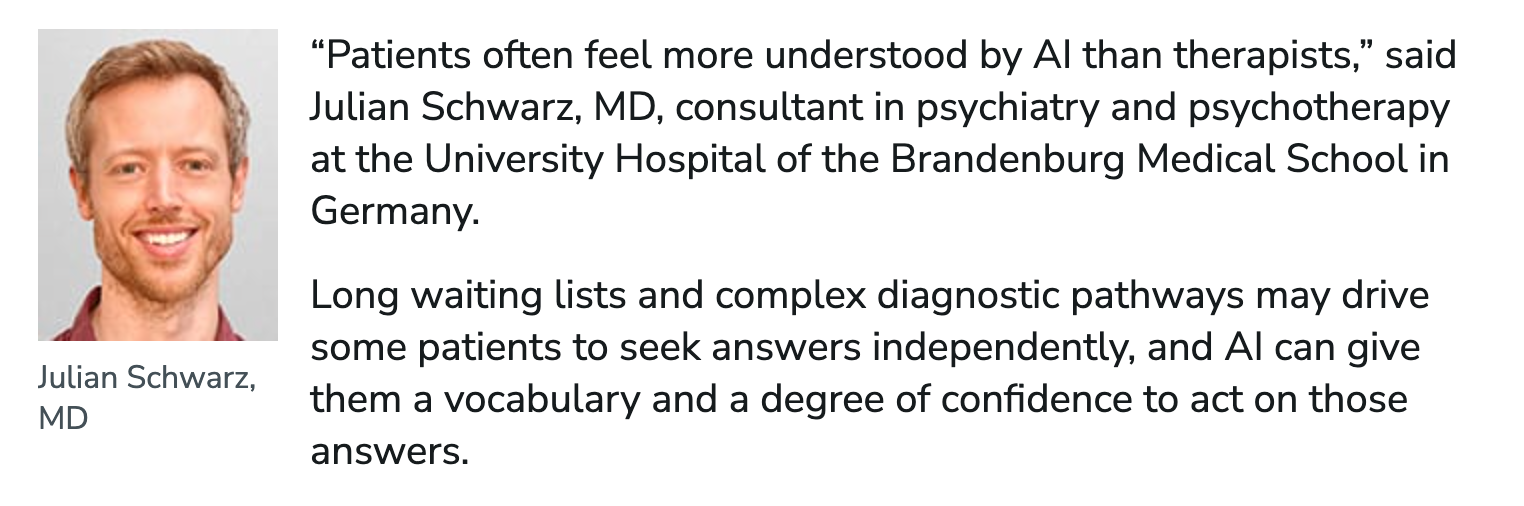
In a recent article on Medscape Europe, Julian Schwarz, a specialist in psychiatry and psychotherapy, highlights the role of generative AI in health-related queries. Due to long waiting times and complex diagnostic pathways, patients are increasingly turning to AI-powered chatbots as a first point of contact.
Experts are observing a new dynamic: "Patients often feel better understood by AI than by therapists," explains Dr. Julian Schwarz. While this gives those affected a vocabulary and confidence when dealing with their health, it also carries risks. Colleagues increasingly report cases in which patients use chatbots for self-diagnosis (for example, regarding ADHD) and subsequently attempt to obtain prescription medications through unofficial channels.
These insights underscore the need to critically monitor the opportunities and risks of digital tools in psychiatric health services research, and to develop viable concepts at the intersection of digital support and medical or psychotherapeutic treatment.
Read the full article here.
May 2026
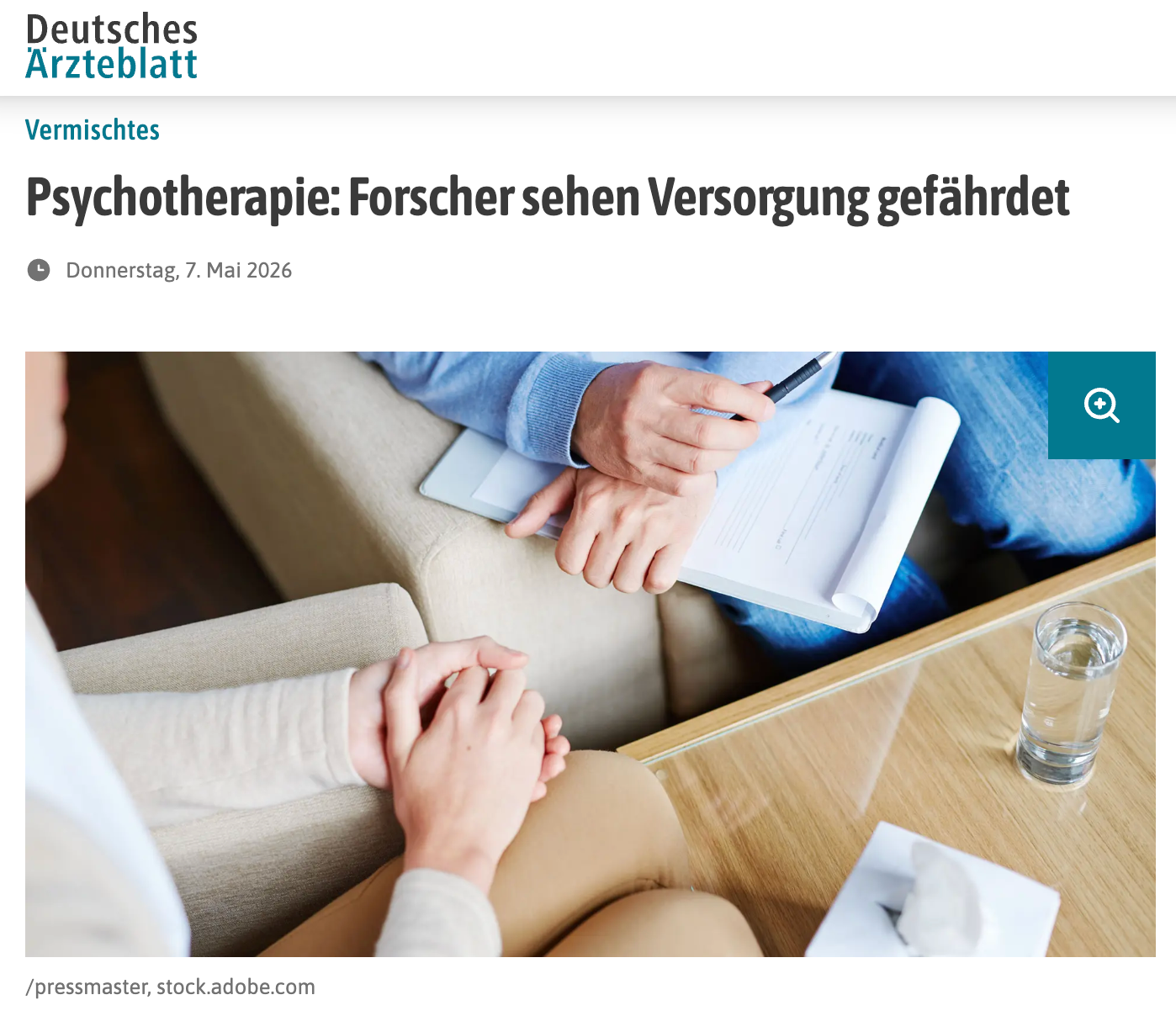
Deutsches Ärzteblatt Article: Researchers See Psychotherapeutic Care at Risk
In an article in the Deutsches Ärzteblatt, scientists, including Julian Schwarz, raise the alarm regarding current health policy decisions. Due to planned budget cuts, such as the reduction of funds for the Innovation Fund (Innovationsfonds), researchers see psychotherapeutic and psychiatric care in Germany acutely threatened.
Although concrete reform concepts have already been tested in studies and pilot projects—enabling better and more flexible patient care at lower costs, their sustainable transition into standard care often fails due to political hurdles.
The article highlights that the issue is not a lack of effective solutions, but rather a lack of political willingness to implement them. The researchers therefore demand a shift in perspective to permanently anchor proven care models within the healthcare system and avert care bottlenecks.
Find the full article here.
March 2026
JMIR Webinar: The Role of "Digital Health Navigators" in Prescription Digital Therapeutics
In an international webinar series hosted by JMIR Publications in collaboration with the Society of Digital Psychiatry, Julian Schwarz presented scientific insights on the use of Digital Health Navigators (DHNs) in prescription digital therapeutics (DiGAs). In conversation with Dr. John Torous (Harvard Medical School), they discussed how human support in everyday care can sustainably increase the often low engagement rates of digital therapeutics.
In the research approach presented by Julian Schwarz—the BMG-funded "DigiNavi Study" conducted in Brandenburg—medical office assistants (MFAs) were specially trained to support patients in selecting, activating, and regularly using DiGAs.
The results demonstrate that close, personal guidance by trusted members of the practice team significantly increases adherence and thereby the effectiveness of digital applications. The session highlights the immense potential of using trained staff to build a cost-effective and efficient bridge between technological innovation and clinical practice.
Watch the full webinar here.

January 2026
BMC Congress 2026 Berlin
The Mental Health Specialist Group of the German Network for Health Services Research (DNVF e.V.) organized a master class at the annual congress of the German Managed Care Association. On January 27, the question of how new forms of psychiatric care can be sustainably implemented in standard care was addressed under the theme: Close, Primary & Outpatient Care! Transferring innovative mental health care models into practice.
In this context, Julian Schwarz reported on the results of the innovation fund-supported “AKtiV-Studie” evaluating the implementation, treatment processes, and effectiveness of ward-equivalent psychiatric treatment (StäB) compared to full inpatient treatment.
Among other things, the study shows that patients with mental illnesses who initially received StäB had fewer inpatient readmissions in the 12-month follow-up and were more satisfied than the comparison group. Since the introduction of StäB in accordance with $115d SGB V in 2018, the trend has been upward. The MHB is currently investigating how digitally supported hybrid care approaches can make StäB more flexible and expand it in the future, for example through needs-based telemedical contacts.

December 2025
Digital medical devices in psychiatric and psychotherapeutic treatment
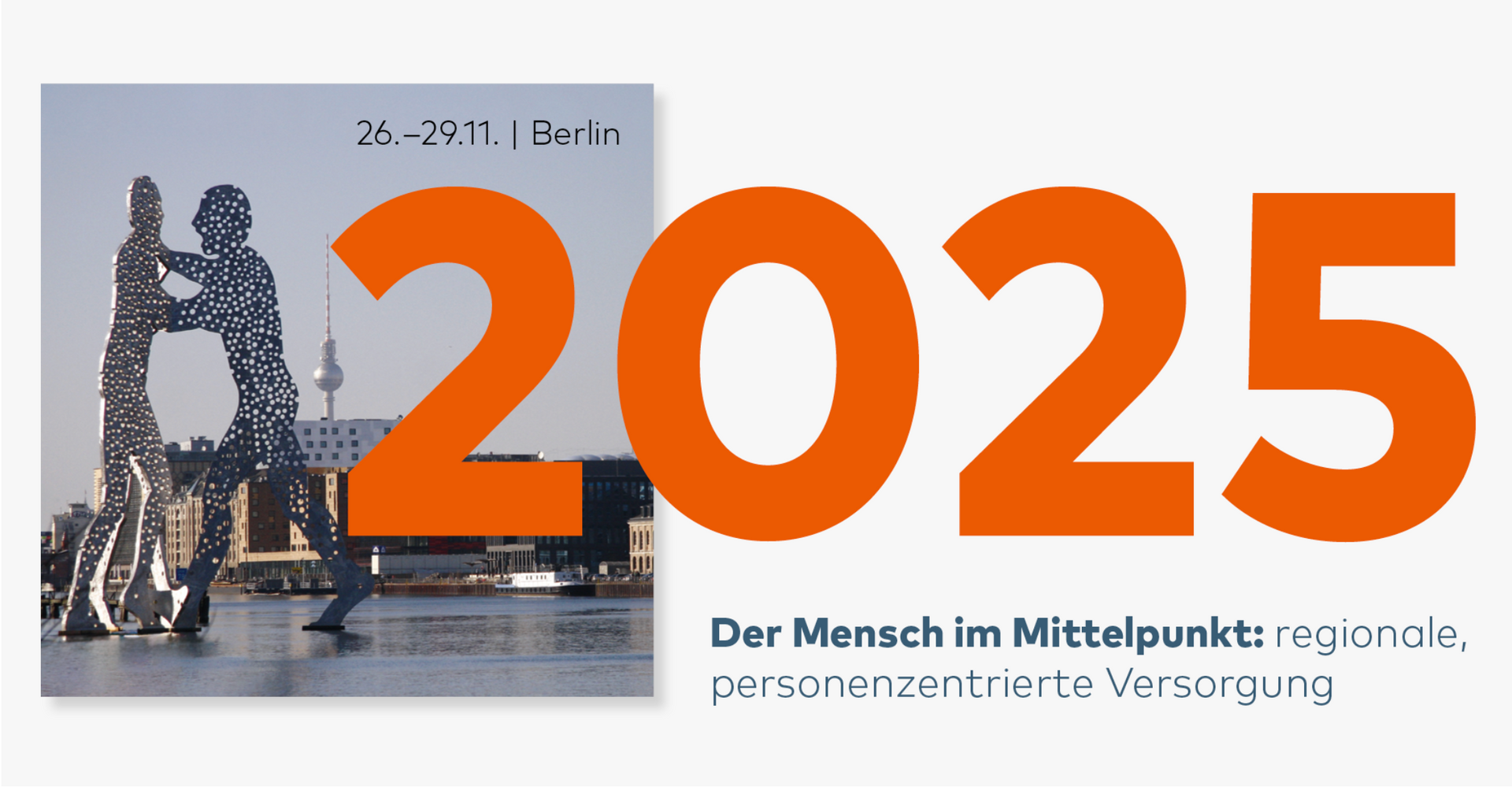
The annual DGPPN Congress took place in Berlin on November 27.
Twenty-five participants successfully completed the workshop “Digital medical devices in psychiatric and psychotherapeutic treatment – from diagnostics to therapy to monitoring” led by Julian Schwarz and Jakob Kaminski.
The workshop offered participants a practical introduction to the use of digital medical devices throughout the entire treatment pathway. The focus was on applications for digital diagnostics, therapy-accompanying interventions, and tools for continuous progress monitoring.
In a practical section, participants were able to try out selected applications for themselves and discuss usage scenarios in small groups, which were then critically debated.
The aim of the workshop was to enable professionals to classify digital medical devices in a differentiated manner and to take the first steps towards integrating them into everyday clinical practice.
The workshop was aimed at psychotherapists, psychiatrists, medical and psychological professionals in training or further education, as well as interested parties from related fields of care.
Digital Navigators in Mental Health: American, Canadian, and German Perspectives on Training, Implementation, and Impact
On December 11, 2025, the 9th annual conference on “Technology in Psychiatry” will take place. Our working group will be represented there by research assistant Laura Uchtmann, M.Sc.
This symposium highlights the emerging role of Digital Navigators in mental health, supported by international perspectives from the US, Canada, and Germany. These roles help bridge clinical care and technology, improving patient engagement, digital literacy, and treatment outcomes across various mental health settings.

October 2025
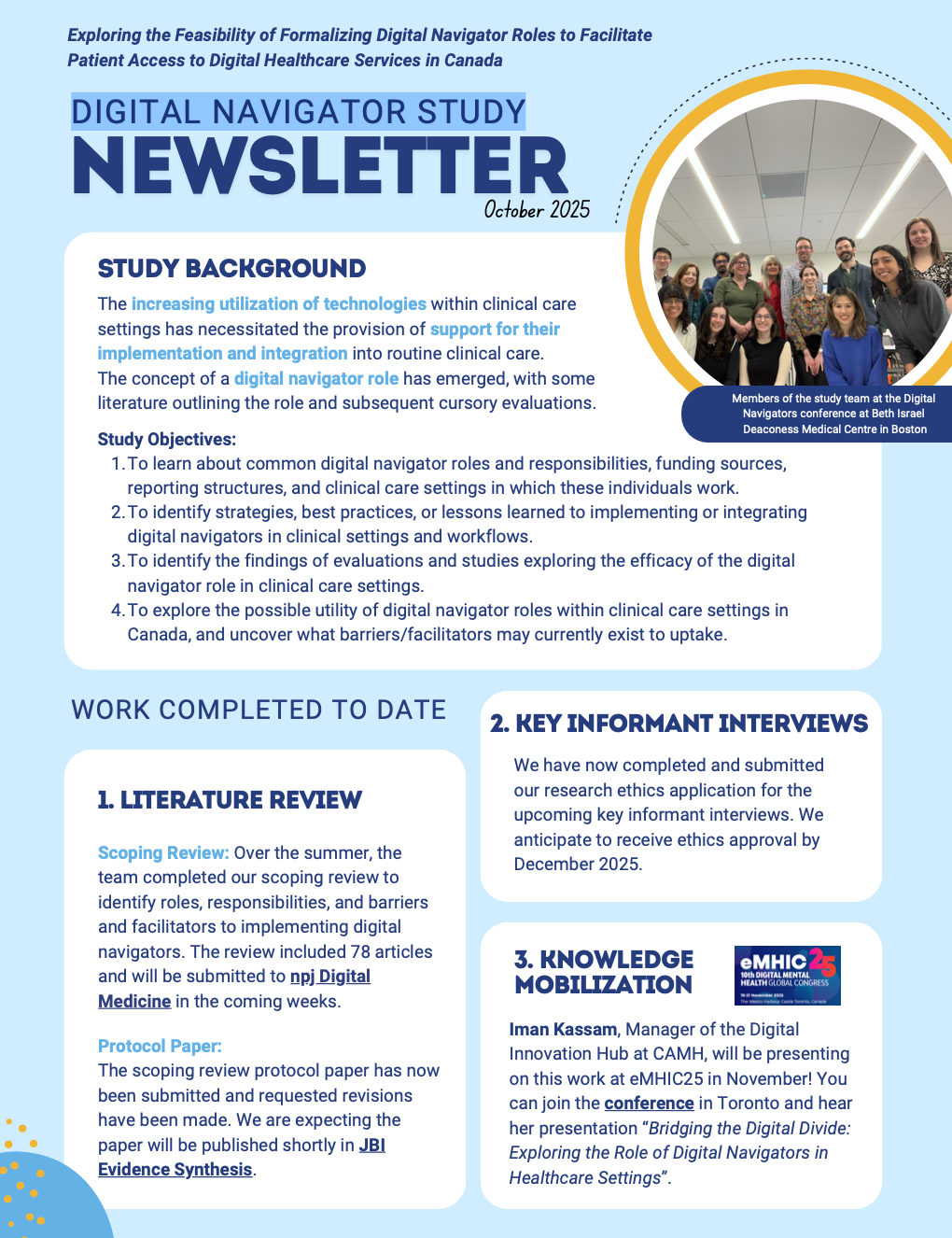
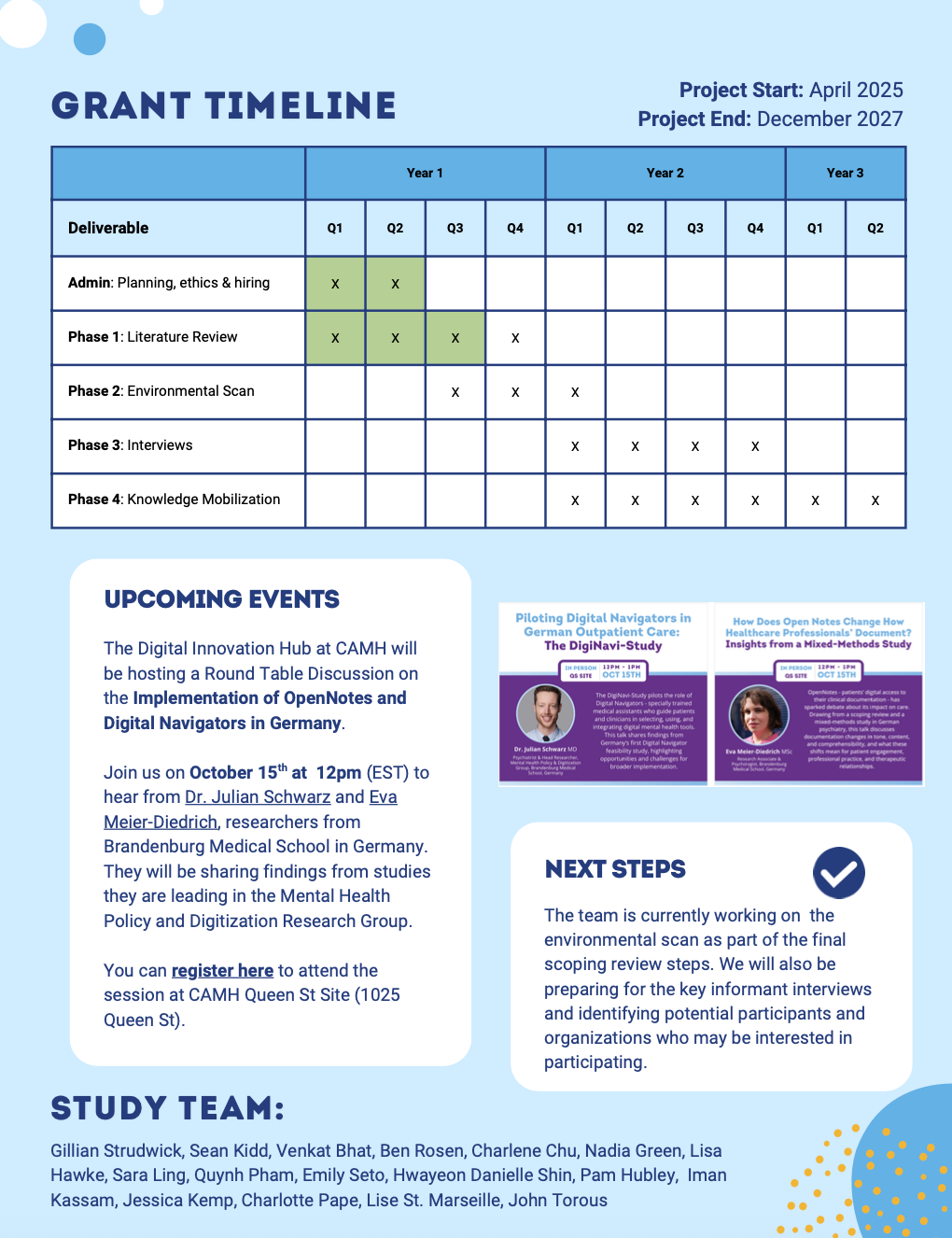
Digital Navigator Study in Toronto
Dr. Julian Schwarz and Eva Meier-Diedrich are currently conducting research with Dr. Gillian Strudwick at the University of Toronto and the Centre for Addiction and Mental Health (CAMH).
During their stay, they are learning about the research conducted by Dr. Strudwick's working group and providing insights into the study results of the IAG Mental Health Policy and Digitization at the Brandenburg Medical School.
On the second page of the newsletter, you can see Eva Meier-Diedrich and Julian Schwarz briefly presenting the project.
DigiNavi study in the German Medical Journal
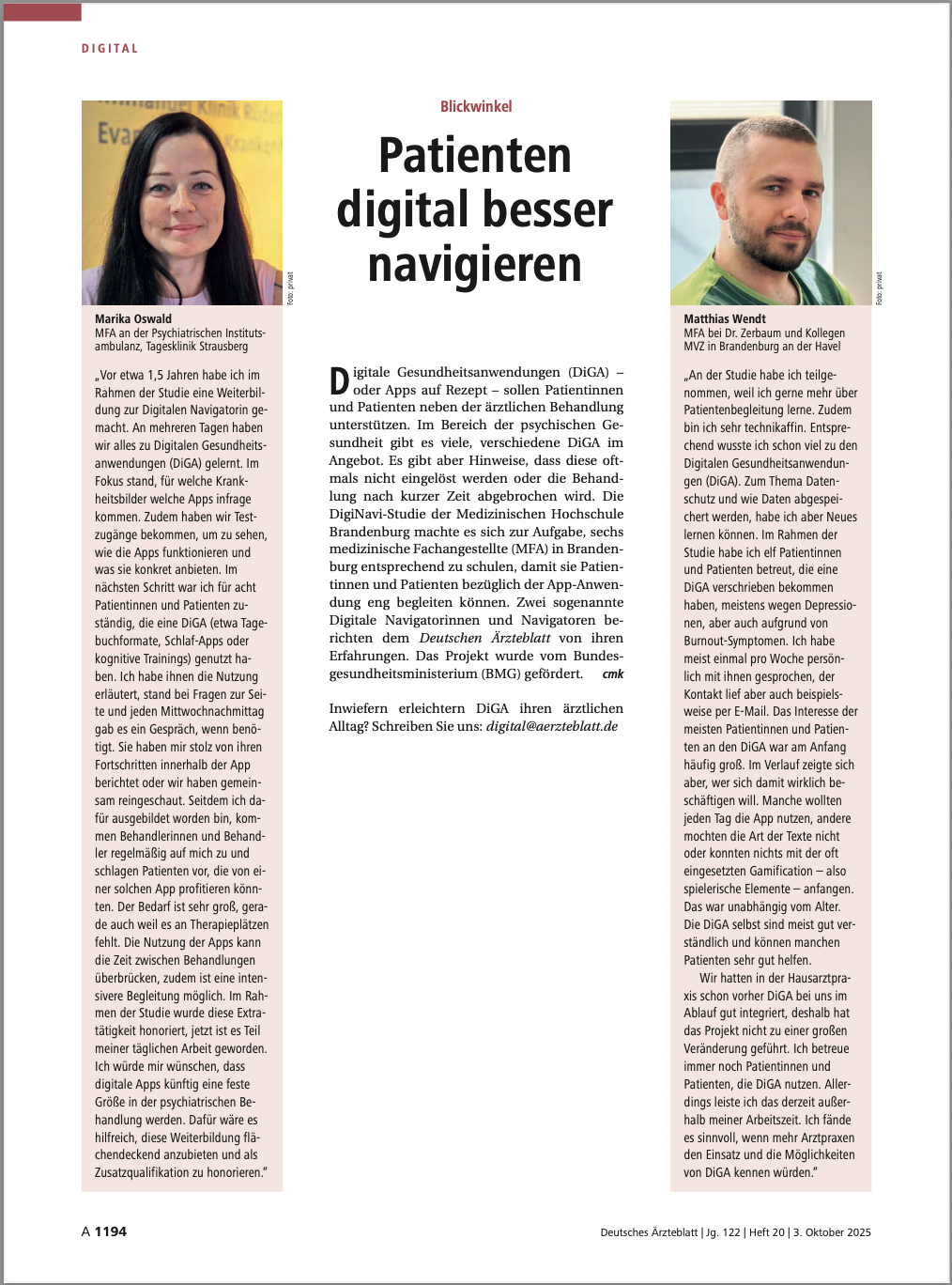
The 20/2025 issue of the German Medical Journal dated October 3 presents the DigiNavi study conducted by our working group.
The study examines how digital navigators can support patients with mental illnesses in the use of digital health applications (DiGAs).
In the project, six medical assistants from general practices and psychiatric outpatient clinics in Brandenburg were trained as digital navigators. They closely and continuously support patients in their use of DiGAs for mental health.
In a short interview, two MFAs who participated in the DigiNavi study as digital navigators were interviewed. They report on their experiences and explain how DiGAs and digital navigators can complement the care of people with mental illness.
The full article can be read in the German Medical Journal:
Further information on the DigiNavi study can be found on the following websites:
September 2025
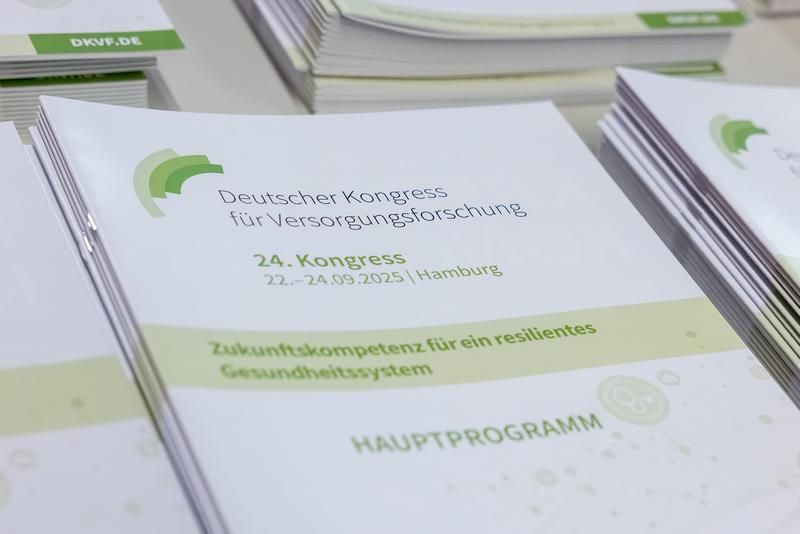
24th German Congress for Health Services Research in Hamburg
Several members of our working group participated in the German Health Services Research Congress in Hamburg from September 22nd to 24th. Our research associate Eva Meier-Diedrich, M.Sc., made an important contribution to the working group with her presentation of the abstract "Experiences of older psychiatric patients and their relatives using a proxy access to open notes: Qualitative study" in the session "Care for older people."
If you are interested in further information, you can visit the DNFV website.
Our working group spokesperson, PD Dr. Julian Schwarz, was also present. Several presentations were given in the sessions "AI in Health Services Research," "Knowledge on the Path to Practice," and "Meeting of the Mental Health Working Group." The abstracts presented were "Digital Navigators for Acceptance and Competence Development with Digital Health Applications (DiGAs) in the Area of Mental Health in Outpatient Care (DigiNavi)," "Changes in Documentation Due to Patient-Side Access to the EHR: Scoping Review," and "AI-Based Errors in the Creation of Patient-Centered Documentation: Mixed-Methods Analysis from the Perspective of Psychiatrists."
If you are interested in further information, please visit the DNVF website.